Problem
As a self-taught developer with experience in MERN / Next.js and deploying apps on Vercel & Supabase, I wanted to push my backend and infrastructure skills further. While managed platforms are convenient, they abstract away many core concepts like containerization, API design, and database management.
Introduction
To challenge myself, I started building a mini-Shopify-style backend API, focused on a clean microservice architecture with Node.js, Express, PostgreSQL, and Docker. This project lets me combine my passion for e-commerce with hands-on experience in real backend systems.
Project Goals
- Gain practical experience in microservices and API design
- Learn how to containerize applications with Docker
- Practice database modeling and Postgres queries
- Prepare for cloud deployment and VPS hosting
- Build a portfolio-ready, interview-friendly backend project
What I’ve Built So Far
Product Service
I focused first on the Product Service, which is the core of any e-commerce system. The service supports full CRUD operations:
POST /products→ Create a new productGET /products→ List all productsGET /products/:id→ Fetch a single productPUT /products/:id→ Update product infoDELETE /products/:id→ Remove a product
All endpoints are connected to a PostgreSQL database, running in a Docker container.
Example Code Snippet
Here’s the update product endpoint:
// routes/products.js
router.put("/:id", async (req, res) => {
  const { id } = req.params;
  const { name, price, inventory } = req.body;

  if (!name && price === undefined && inventory === undefined) {
    return res.status(400).json({ error: "No fields to update" });
  }

  const result = await updateProduct(id, { name, price, inventory });

  if (result.rows.length === 0) {
    return res.status(404).json({ error: "Product not found" });
  }

  res.json(result.rows[0]);
});
Architecture Overview
The project is designed with separation of concerns in mind:
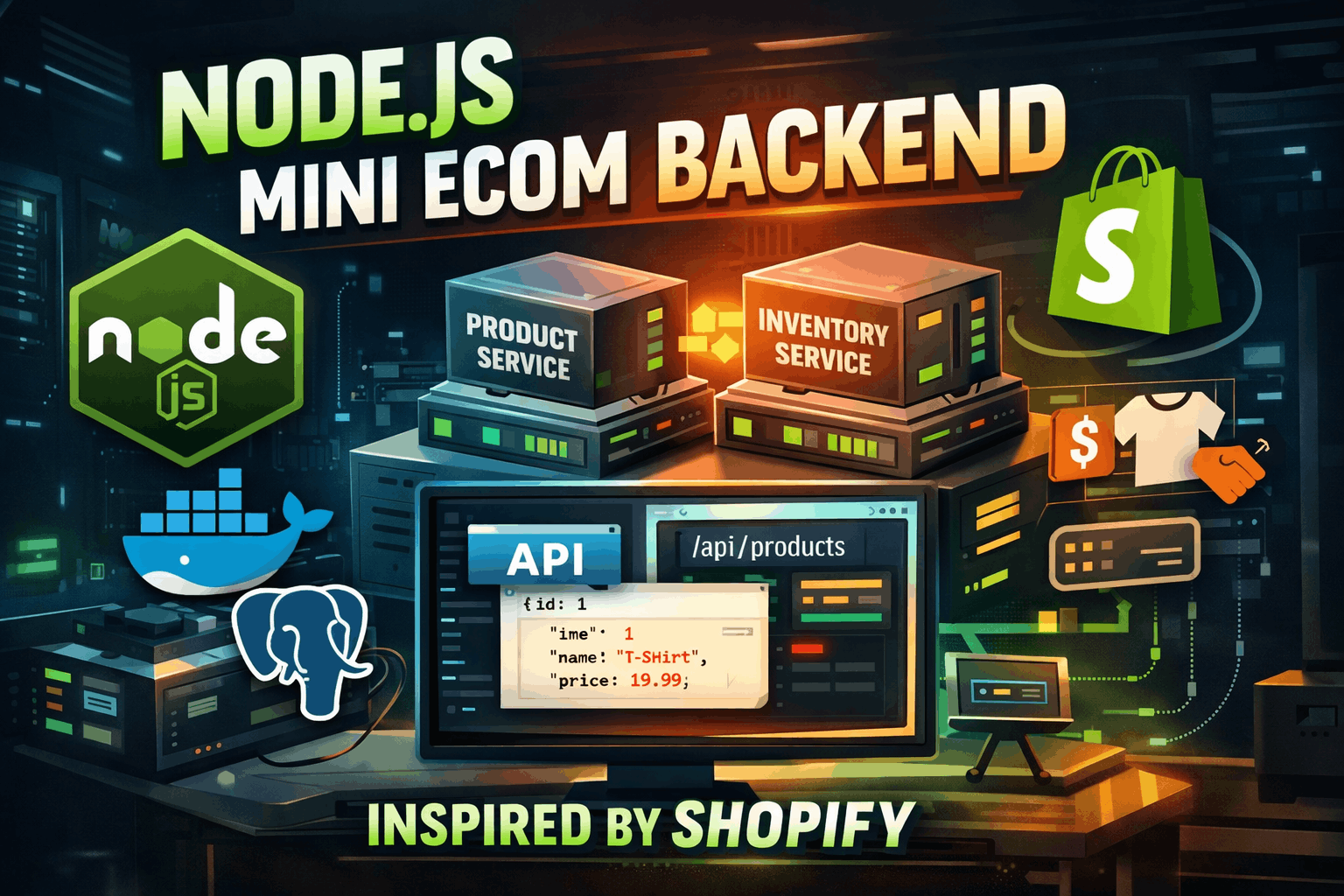
- Product Service → Handles product management
- Inventory Service (future) → Will manage stock and quantities
- Docker Compose → Runs all services and PostgreSQL container
- API Layer → Exposes endpoints to external clients
Architecture Diagram Placeholder:
Screenshots / Visuals to Add
You could add:
- Docker containers running (
docker ps) - Postgres terminal querying products
- API responses from Postman / curl
- VSCode project structure screenshot
- Example microservice flow diagram
Placeholder examples:

Key Learnings So Far
- Hands-on experience with Dockerized Node.js services
- Writing SQL queries and interacting with Postgres from Node.js
- Structuring a project for scalability and maintainability
- Understanding CRUD endpoints and proper REST API practices
- Connecting multiple layers: routes → models → database
- Preparing the foundation for microservices and cloud deployment
What’s Next
Next steps include:
- Inventory Service → Another microservice to manage stock
- Authentication → Basic API key system or JWT
- VPS Deployment → Run the services on a cloud server
- CI/CD → Automate builds and deployment using Docker + GitHub Actions
- Kubernetes (future) → For full production-scale microservices experience